Welcome muggles to the wizarding world!

I thought I should write about something that I’d love to talk about, thanks to my best friend that I came across this magical idea. For those of us that grew up with the characters in the books and movies, visiting The real world of magic would be a dream come true. But, even if you don’t count yourself a fan of the books or the movies, Universal tribute to the world of Harry Potter is an incredible experience.

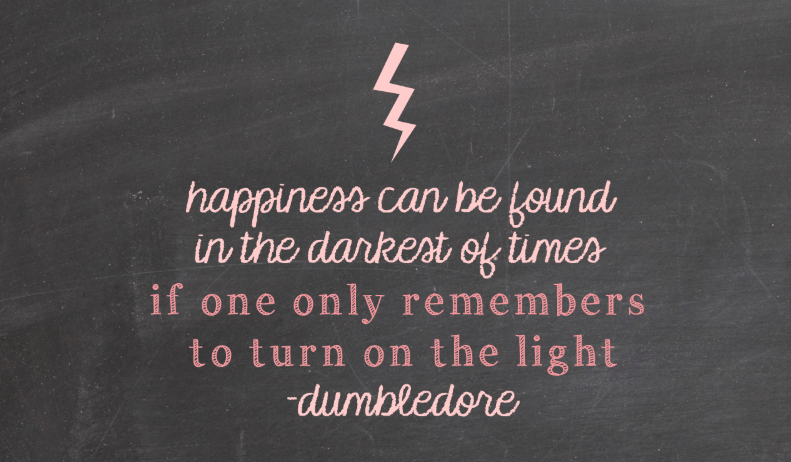
“Words are, in my not-so-humble opinion, our most inexhaustible source of magic.”

–Albus Dumbledore

Harry Potter is a series of fantasy novels written by British author J. K. Rowling. The novels chronicle the lives of a young wizardHarry Potter, and his friends Hermione Granger and Ron Weasley, all of whom are students at Hogwarts School of Witchcraft and Wizardry. The main story arc concerns Harry’s struggle against Lord Voldemort, a dark wizard who intends to become immortal, overthrow the wizard governing body known as the Ministry of Magic and subjugate all wizards and Muggles (non-magical people)./

Since the release of the first novel, Harry Potter and the Philosopher’s Stone, on 26 June 1997, the books have found immense popularity, critical acclaim and commercial success worldwide. They have attracted a wide adult audience as well as younger readers and are often considered cornerstones of modern young adult literature.[2] As of February 2018, the books have sold more than 500 million copies worldwide, making them the best-selling book series in history, and have been translated into eighty languages . The last four books consecutively set records as the fastest-selling books in history, with the final installment selling roughly eleven million copies in the United States within twenty-four hours of its release.

The series was originally published in English by two major publishers, Bloomsbury in the United Kingdom and Scholastic Press in the United States. A play, Harry Potter and the Cursed Child, based on a story co-written by Rowling, premiered in London on 30 July 2016 at the Palace Theatre, and its script was published by Little, Brown. The original seven books were adapted into an eight-part namesake film series by Warner Bros. Pictures, which is the third highest-grossing film series of all time as of February 2020. In 2016, the total value of the Harry Potter franchise was estimated at $25 billion,making Harry Potter one of the highest-grossing media franchises of all time.

Plot

The central character in the series is Harry Potter, a boy who lives in the fictional town of Little Whinging, Surrey with his aunt, uncle, and cousin – the Dursleys – and discovers at the age of eleven that he is a wizard, though he lives in the ordinary world of non-magical people known as Muggles.The wizarding world exists parallel to the Muggle world, albeit hidden and in secrecy. His magical ability is inborn, and children with such abilities are invited to attend exclusive magic schools that teach the necessary skills to succeed in the wizarding world.

Harry becomes a student at Hogwarts School of Witchcraft and Wizardry, a wizarding academy in Scotland, and it is here where most of the events in the series take place. As Harry develops through his adolescence, he learns to overcome the problems that face him: magical, social, and emotional, including ordinary teenage challenges such as friendships, infatuation, romantic relationships, schoolwork and exams, anxiety, depression, stress, and the greater test of preparing himself for the confrontation that lies ahead in wizarding Britain’s increasingly-violent second wizarding war.

Each novel chronicles one year in Harry’s life during the period from 1991 to 1998.The books also contain many flashbacks, which are frequently experienced by Harry viewing the memories of other characters in a device called a Pensieve.

The environment Rowling created is intimately connected to reality. The British magical community of the Harry Potter books is inspired by 1990s British culture, European folklore, classical mythology and alchemy, incorporating objects and wildlife such as magic wands, magic plants, potions, spells, flying broomstickscentaurs and other magical creatures, and the Philosopher’s Stone, beside others invented by Rowling. While the fantasy land of Narnia is an alternate universe and the Lord of the Rings‘ Middle-earth a mythic past, the wizarding world of Harry Potter exists parallel to the real world and contains magical versions of the ordinary elements of everyday life, with the action mostly set in Scotland (Hogwarts), the West Country, Devon, London, and Surrey in southeast England.[13] The world only accessible to wizards and magical beings comprises a fragmented collection of overlooked hidden streets, ancient pubs, lonely country manors, and secluded castles invisible to the Muggle population.
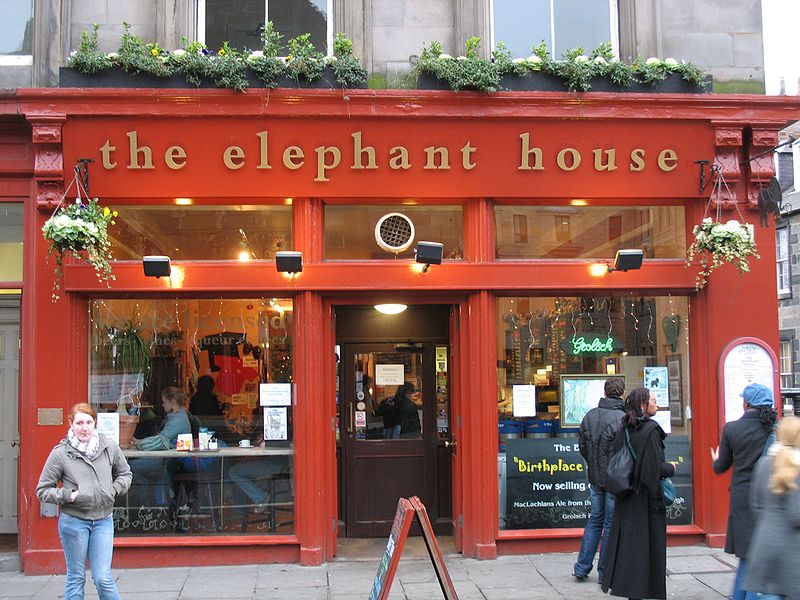
The Elephant House was one of the cafés in Edinburgh where Rowling wrote the first part of Harry Potter.
The J. K. Rowling plaque on the corner of the former Nicholson’s Cafe (now renamed Spoon) at 6A Nicolson St, Edinburgh
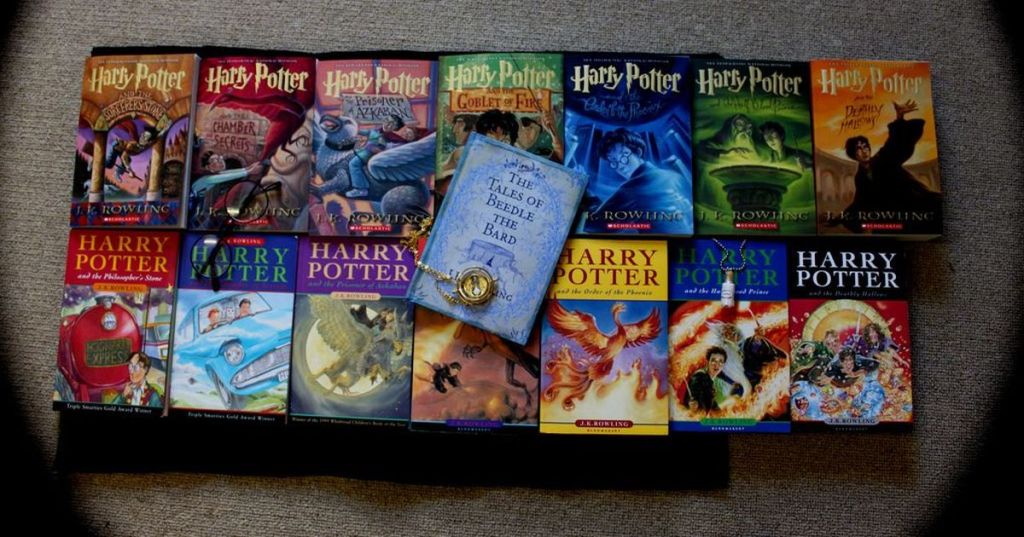
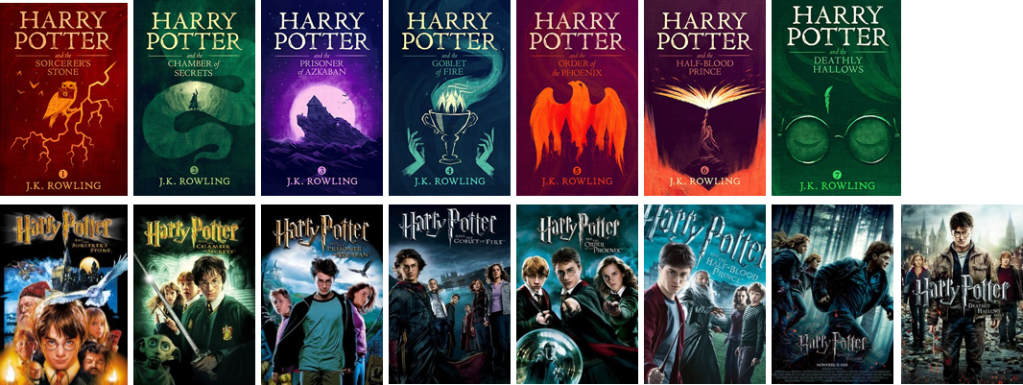
All the books of Harry Potter written by J.K Rowling
Movies on the written books

Harry Potter (film series)

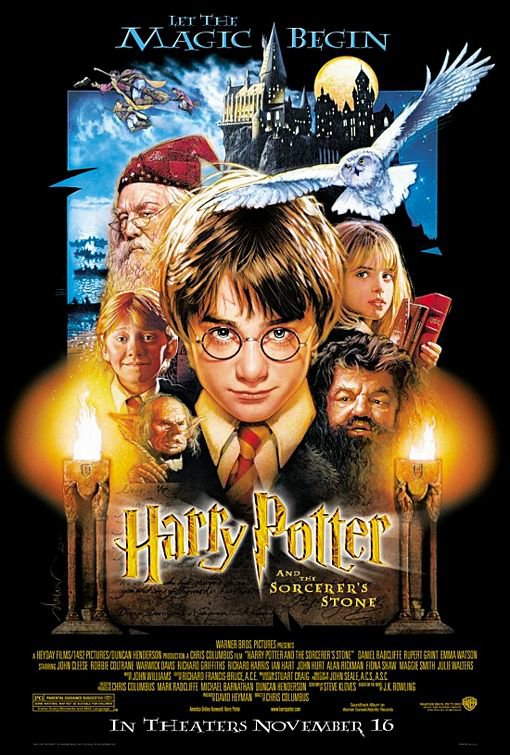
Harry Potter is a British-American film series based on the eponymous novels by author J. K. Rowling. The series is distributed by Warner Bros. and consists of eight fantasy films, beginning with Harry Potter and the Philosopher’s Stone (2001) and culminating with Harry Potter and the Deathly Hallows – Part 2 (2011).A spin-off prequel series will consist of five films started with Fantastic Beasts and Where to Find Them (2016), marking the beginning of the Wizarding World shared media franchise.

The series was mainly produced by David Heyman, and stars Daniel RadcliffeRupert Grint, and Emma Watson as the three leading characters: Harry PotterRon Weasley, and Hermione Granger. Four directors worked on the series: Chris ColumbusAlfonso CuarónMike Newell, and David Yates.Michael Goldenberg wrote the screenplay for Harry Potter and the Order of the Phoenix (2007), while the remaining films’ screenplays were written by Steve Kloves. Production took place over ten years, with the main story arc following Harry Potter’s quest to overcome his arch-enemy Lord Voldemort.

Harry Potter and the Deathly Hallows, the seventh and final novel in the series, was adapted into two feature-length parts. Part 1 was released in November 2010, and Part 2 was released in July 2011.

Philosopher’s Stone and Deathly Hallows – Part 2 are among the 50 highest-grossing films of all time, with the latter ranking as the twelfth highest-grossing film, having grossed over $1 billion. Without inflation adjustment, it is the third highest-grossing film series with $7.7 billion in worldwide receipts.

THE WIZARDING WORLD

The Wizarding World of Harry Potter is a chain of themed areas at Universal Parks & Resorts based on the Harry Potter media franchise, adapting elements from the Warner Bros.’ film series and original novels by the creative mind of J. K. Rowling.
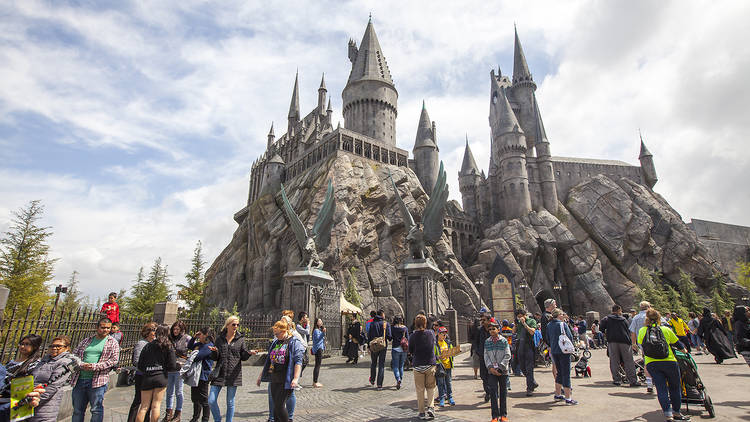
A guide to the Wizarding World of Harry Potter in Los Angeles

Here are some interesting videos you’d like to see.
THANK YOU!

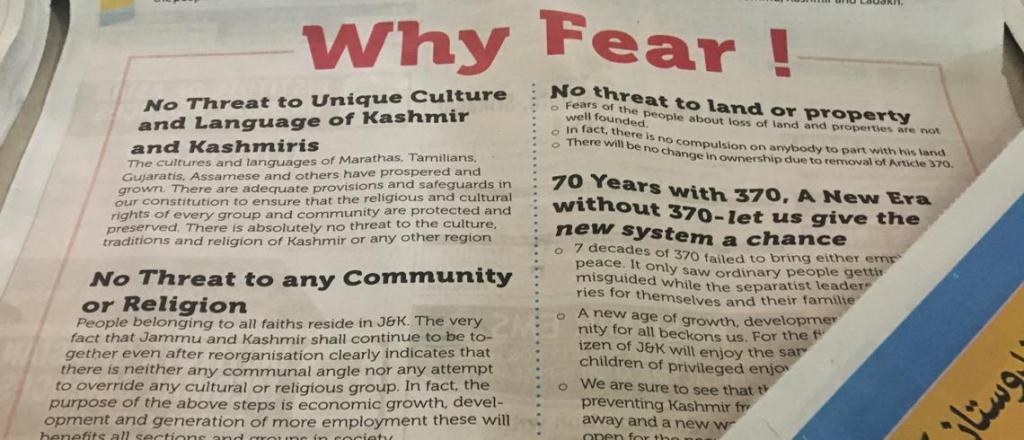
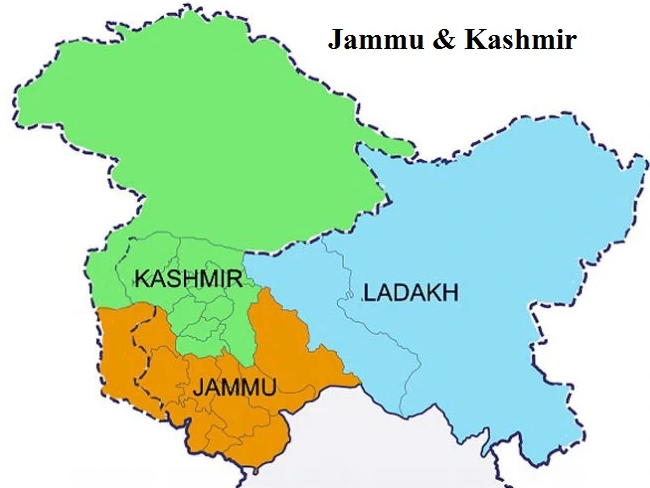
What are Articles 370 and 35A? Why they are important for Jammu and Kashmir?

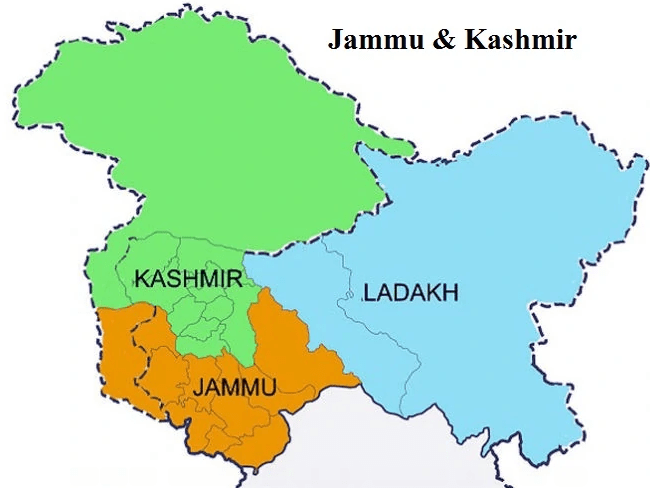
Jammu Kashmir is a Union Territory in northern India. On 5th August 2019; the central government has removed the special status of the Jammu and Kashmir after abolishing article 370 of the Indian Constitution.

Jammu and Kashmir

Facts about Jammu & Kashmir:

1. Area2,22236 sq km.
2. Population1.24 cr (2011 census)
3.Establishment26 Oct, 1947
4. Principal & Official LanguagesThe official language of the state is Urdu. Other languages are Kashmiri, Dogri, Pahari, Balti, Ladakhi, Punjabi, Gurji, Dadri
5. Neighboring StatesHimachal Pradesh, Punjab
6. Capital Srinagar (Summer), Jammu (Winter)
7. Members of ParliamentLok Sabha- 6, Rajya Sabha- 4
8. LegislatureUnicameral, 107 (24 from POK vacant) +2 (Nominated)
9. AirportsJammu, Srinagar
10. Major CitiesSrinagar, Jammu, Anantnag,, Udhampur, Baramula, Sopore, Bandipura and Leh
11. FestivalsAssuj, Lohri, Sinh Sankranti,Bahu Mela In Jammu, Id-Ul-Fitr, Id-Ul-Juha, Milad-Ul-Nabi, Muharram, Hemis in Laddakh
12. Economy  SizeUS$ 16.74 billion,J&K is best known for Horticulture products, Temperate Fruits, Apple, Peach Plum, Cherry, Almond Etc.Its 80% population is dependent on Agriculture and 45% economic revenue is from Agro-Horticulture sales
13. Literacy83.45%
14. Districts22
15.Sex Ratio (as per 2011 census)880/Thousand male
16. Principal DancesRouf (women-romance and heroic), Kudra ( Dogra men), Hemis Gumpa, Chakri
17. Principal RiversIndus, Jhelum, Chinab, Ravi and Sindh
18. Principal MineralsCoal, Copper, Zinc, Lead, Limestone, Bauxite And Lignite, Mica
19.PassesZoji la, Pir Panjal, Great Himalaya, Zaskar, Laddakh (little Tibet),
20. Tourist & Historical PlacesApharwat Peak (Gulmarg), Shankaracharya Hill (Srinagar), Dal Lake (Srinagar), Gulmarg Gondola (Gulmarg), Indira Gandhi Tulip Garden (Srinagar), Nigeen Lake (Srinagar), Mughal Gardens (Srinagar), Amarnath Cave (Anantnag), Zojila Pass (Sonamarg),Gulmarg Alpine Guides (Gulmarg).
21.LakesWular, Achal, Dal, Pangong, Moriri, And Kar
22. State density653 person/ km2
23. Child Sex Ratio795/ 1000 male Child

What the two articles mean:

Article 370

History

In October 1947, the then-Maharaja Hari Singh of Kashmir signed the ‘Instrument of Accession’, which specified three subjects on which Jammu and Kashmir would transfer its powers to the government of India: 1. Foreign affairs, 2. Defence and 3. Communications. In March 1948, the Maharaja appointed an interim government in the state, with Sheikh Abdullah as the prime minister. In July 1949, Sheikh Abdullah and three other colleagues joined the Indian Constituent Assembly and negotiated the special status of J&K, leading to the adoption of Article 370. The controversial provision was drafted by Sheikh Abdullah.

What are the provisions of Article 370?

Parliament needs the Jammu & Kashmir government’s nod for applying laws in the state — except defence, foreign affairs, finance, and communications.

The law of citizenship, ownership of property, and fundamental rights of the residents of Jammu & Kashmir is different from the residents living in rest of India. Under Article 370, citizens from other states cannot buy property in Jammu & Kashmir. Under Article 370, the Centre has no power to declare financial emergency.

It is important to note Article 370(1)(c) explicitly mentions that Article 1 of the Indian Constitution applies to Kashmir through Article 370. Article 1 lists the states of the Union. This means that it is Article 370 that binds the state of J&K to the Indian Union. Removing Article 370, which can be done by a Presidential Order, would therefore make the state independent of India.

Temporary provision or not?

A petition filed by Kumari Vijayalakshmi Jha challenged the validity of Article 370 against the Delhi High Court’s April 11, 2017 order. The petition had said that the continuance of the temporary provision of Article 370 even after dissolution of Constituent Assembly of J&K, and that of J&K Constitution, which has never got the assent of the President of India or Parliament or the government of India, “amounts to fraud on the basic structure of our Constitution”.

Article 35A

What is it?

Article 35A gives the Jammu & Kashmir Legislature full discretionary power to decide who the ‘permanent residents’ of the state are. It gives them special rights and privileges regarding employment with the state government, acquisition of property in the state, settling in the state, and the right to scholarships and other forms of aid that the state government provides. It also allows the state legislature to impose any restrictions upon persons other than the permanent residents regarding the above.

To guarantee these special rights and privileges, the Article says no act of the state legislature that comes under it can be challenged for violating the Constitution or any other laws.

So the provisions of the article 370 came into force from 17 November, 1952. Now let’s understand the key provisions of the article 370 of the Indian constitution.

Article 370 gives the following rights and facilities to the citizens of J & K;

1. Jammu & Kashmir; is an integral part of the Indian Union. But its area, name and boundary can’t be altered without the consent of the state assembly.

2. According to this article, the central government has to get approval from the state government to implement all other laws except defense, foreign affairs and communication in the state.

3. Jammu and Kashmir has its constitution because of article 370 and its administration is run accordingly not according to the Constitution of India.

4. J & K has 2 flags; One of Kashmir and another is India’s Tricolor flag.

5. The citizens of other Indian states can not buy any property or kind of any property in this state. It means, the fundamental right to property is still in force in this state.

6. The people of Jammu and Kashmir have two types of citizenship. One is Indian citizenship and another is Kashmiri citizenship. Worth to mention that no other Indian can have two citizenship simultaneously.

7. If a Kashmiri woman marries an Indian, then her Kashmiri citizenship terminates, but if she marries a Pakistani, it does not affect her citizenship status.

8. If a Pakistani boy marries a Kashmiri girl, he gets Indian citizenship too while Indians don’t have this privilege.

10. Part 4 of the Indian Constitution (Directive Principal of State Policy) and Part 4A (Fundamental Duties) are not applicable in this State.

It means the citizens of Kashmir are not bound to save the cow, maintain the dignity of the women and respect the National Flag of India.

11. One of the most shocking right is that Insulting National Symbols of India (National Anthem, National Flag etc.) in J & K does not fall under the category of crime.

12. The President of India does not have power to declare financial emergency in the state.

13. Any amendment in the Constitution of India does not apply automatically to J & K unless a special order of President is not passed.

14. The Central government can impose National Emergency in the state in two conditions only; war and external invasion.

15. The President has no power to suspend the constitution of the state on the ground of failure to comply with the directions given by him.

16. If the national emergency is imposed in the country on the basis of internal disturbance; this emergency is not applicable in the Jammu and Kashmir until it is approved by the state government.

17. The Central Government can not impose National Emergency in the state on the basis of internal disturbance in the state. The central government must take the permission of state government before doing so.

18. Only the resident of the Kashmir can take selection in the jobs of the state government.

It is clear from the facts given above that Jammu and Kashmir is a integral part of the Indian but this state have some special provisions for its citizens which are not enjoyed by the other Indians.

“A leader is not born out of the blue. You have to know the pulse of the people from Kashmir to Kanyakumari and from Gujarat to Guwahati. You have to relate yourself with them, and only then does one become a leader”

Sushma Swaraj

Hence ,It was important to do this and indian government did the right thing.

Gadgets : The most significant invention.

gadget is a small tool such as machine that has a particular function, but is often thought of as a novelty. Gadgets are sometimes referred to as gizmos.

A widely circulated story holds that the word gadget was “invented” when Gaget, Gauthier & Cie, the company behind the repoussé construction of the Statue of Liberty (1886), made a small-scale version of the monument and named it after their firm; however this contradicts the evidence that the word was already used before in nautical circles, and the fact that it did not become popular, at least in the USA, until after World War I. Other sources cite a derivation from the French gâchette which has been applied to various pieces of a firing mechanism, or the French gagée, a small tool or accessory.

GADGETS WHICH CHANGED THE WORLD

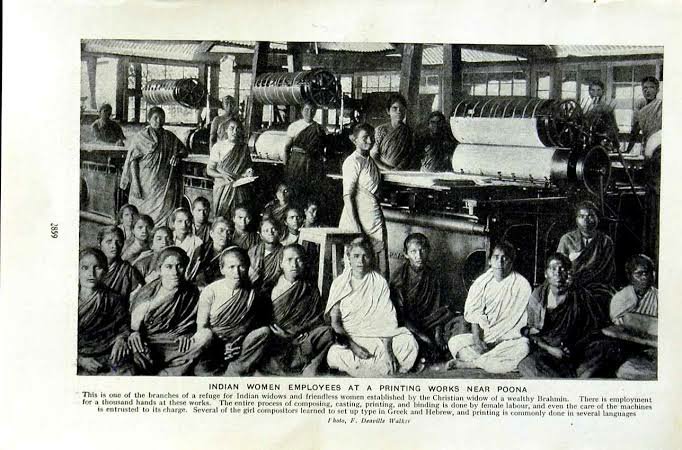
7. The Printing Press

The original game-changing gadget was too big to fit in your pocket, but it revolutionized literacy all the same. Around 1450, German goldsmith Johannes Gutenburg transformed printing with his press, a table-sized machine modeled after the wine presses of the day. The invention used thousands of movable metal letters to quickly and cheaply copy text. Gutenburg’s press took the spread of ideas out of the hands of elites and paved the way for the Protestant Reformation and the Enlightenment.

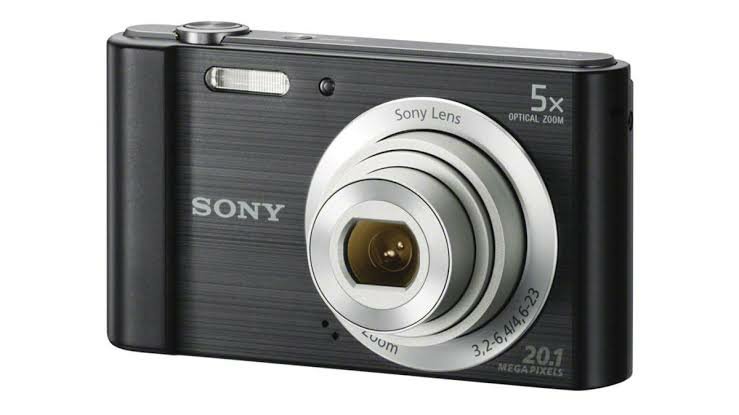
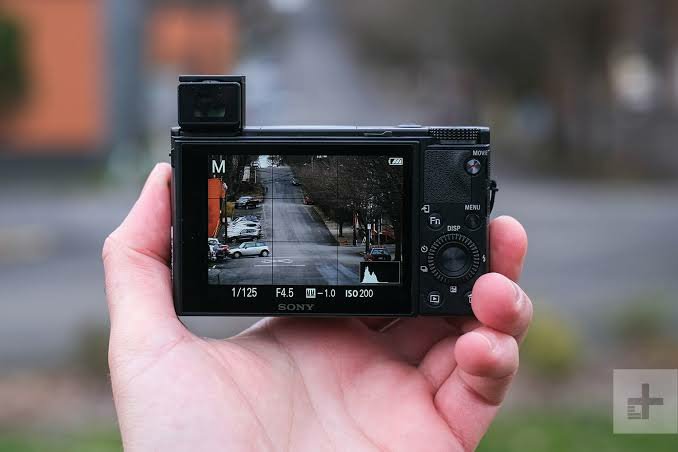
6. The point-and-shoot camera

George Eastman brought photography to the masses in 1888 with the Kodak camera. For the first time, the average person could freeze reality in images, which became worth, well, a thousand words. With the advent of digital cameras 100 years later, photography became even more ubiquitous. Now almost every cell phone comes equipped with a camera, and low-cost digital recorders like the Flip camera are democratizing video as well.

Go back in time and save your memories.

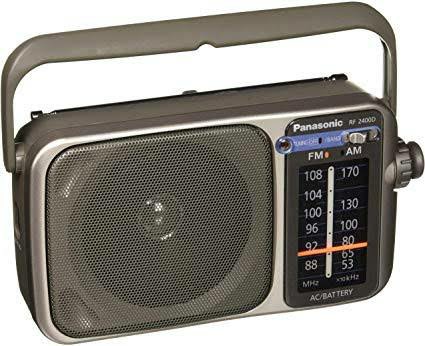
5. Radio

When Guglielmo Marconi patented his radiotelegraph system in 1901, he envisioned it as a way for ships to wirelessly communicate with one another. But by the 1920s, regular broadcasts of music and news exploded, ushering in a new era of mass media. From baby monitors to military radar, radio is now firmly entrenched in everyday life. The ability to harness radio waves eventually made possible all forms of wireless networking, from cell phones to Wi-Fi.

Panasonic RF-2400D AM
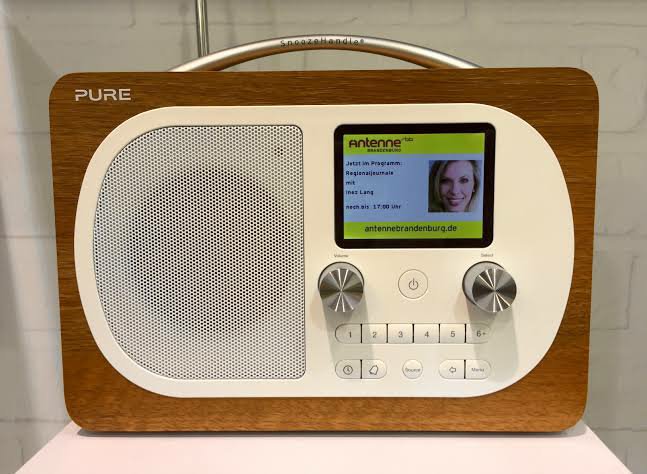
Digital audio broadcasting

4. Television

Barely 20 years after radio shook the entertainment landscape, broadcast television sent out another temblor in the 1930s and 1940s. Television changed everything from the way people got their news to how advertising was done.

Despite being blamed for everything from our sedentary lifestyles to societal violence, TV isn’t going anywhere, and in fact an incredible number of waking ours are spent in front of the boob tube. Last year, a Nielson report estimated that Americans watch more than 5 hours a day, on average. The Consumer Electronics Association (CEA) recently estimated that, recession be danged, ownership of high-definition TVs in U.S. households has doubled in the past two years.

Old to new

3.The PC

Once upon a time, computers were room-sized behemoths well outside the price range of the average Joe. Home computers were available in the 1970s, but the market only really took off in 1981 with IBM’s PC, which cost less than $1,600.

Since then, PCs have of course become smaller and more powerful, and they have paved the way for laptops, netbooks, smartbooks, smartphones and other mobile computing. Oh, and they made the Internet possible. By 2007, 75 percent of U.S. households had a broadband connection, and more than 230 million PCs were in use nationwide.

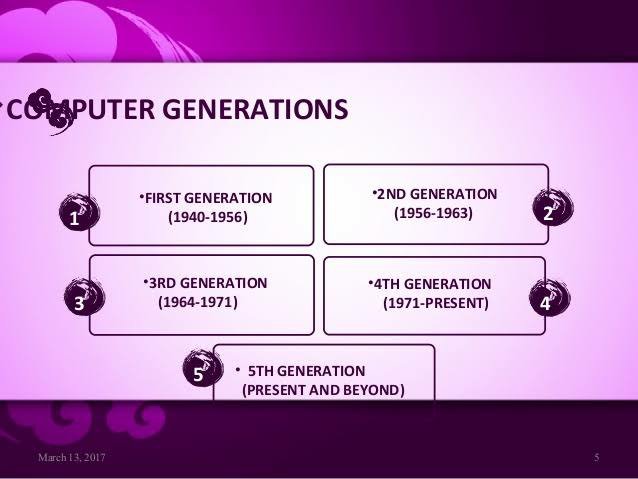
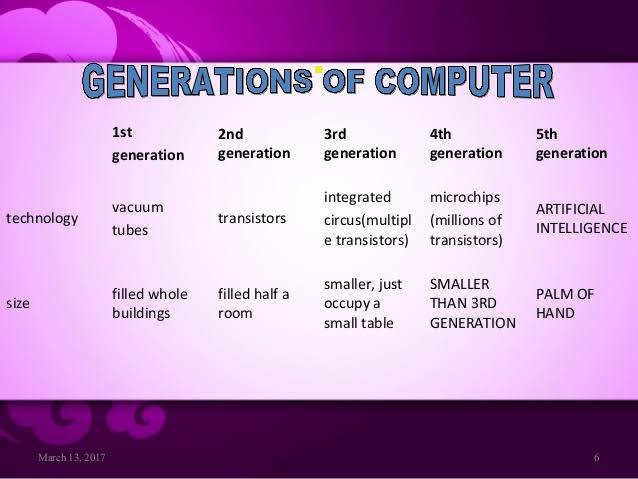
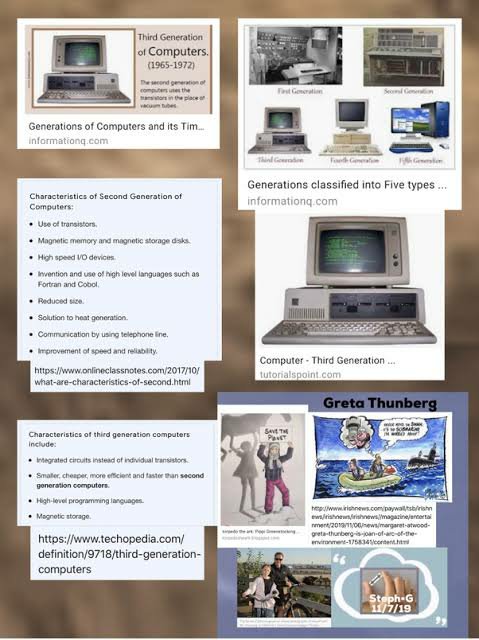
Generations

2.Smartphones

Continuing the trend toward smaller and mobile, smartphones enable users to surf the Web, send email and run applications, or “apps,” from their phones. As with the PC, IBM took the lead on the world’s first smartphone, introducing the “Simon” in 1993. Weighing in at more than a pound, the Simon offered a touch-screen keyboard, email and fax capabilities, and functions like a calendar and address book. It cost $900.

Smart phones got smaller and cheaper throughout the ’90s, and the first decade of the 21st century saw Treos, Blackberries and iPhones becoming household names. Whether it’s text messaging, social networking or Googling the answers at Trivia Night, constant connectedness is a given in the era of the smartphone. The Pew Internet & American Life Project estimates that on any typical day, nearly one-fifth of Americans use the Internet on a mobile device such as a smartphone or laptop.

All that convenience may make traditional cellular phones a thing of the past: According to Pyramid Research, by 2014, 60 percent of new handsets sold in the U.S. will be smartphones.

It’s a long way down- generations of mobile phones to smart phones.

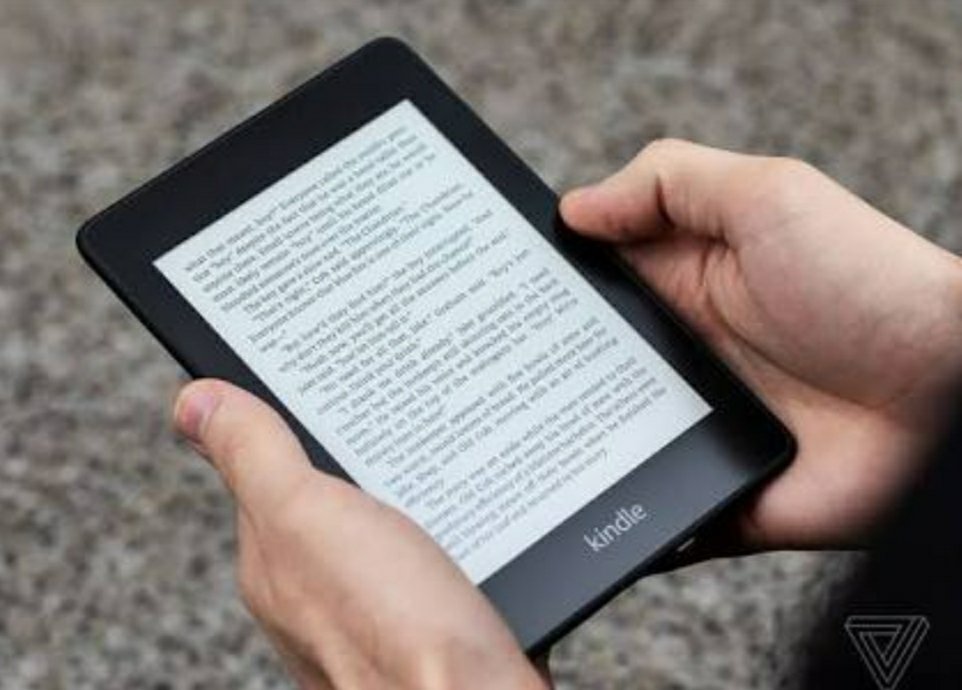
1.E-readers

As a relative newcomer, e-readers have huge potential to change the way we consume media, Dan Schechter, vice president for media and entertainment at L.E.K. consulting, told TechNewsDaily.

A recent L.E.K. study found that almost half of people who bought e-readers reported reading more newspapers, books and magazines than they otherwise would have. E-readers also offer the chance to make reading more interactive. Imagine a fashion magazine with embedded links to the designers’ Web sites, or a scheme that would offer discounted e-books for readers who didn’t mind seeing advertisements in the margins.

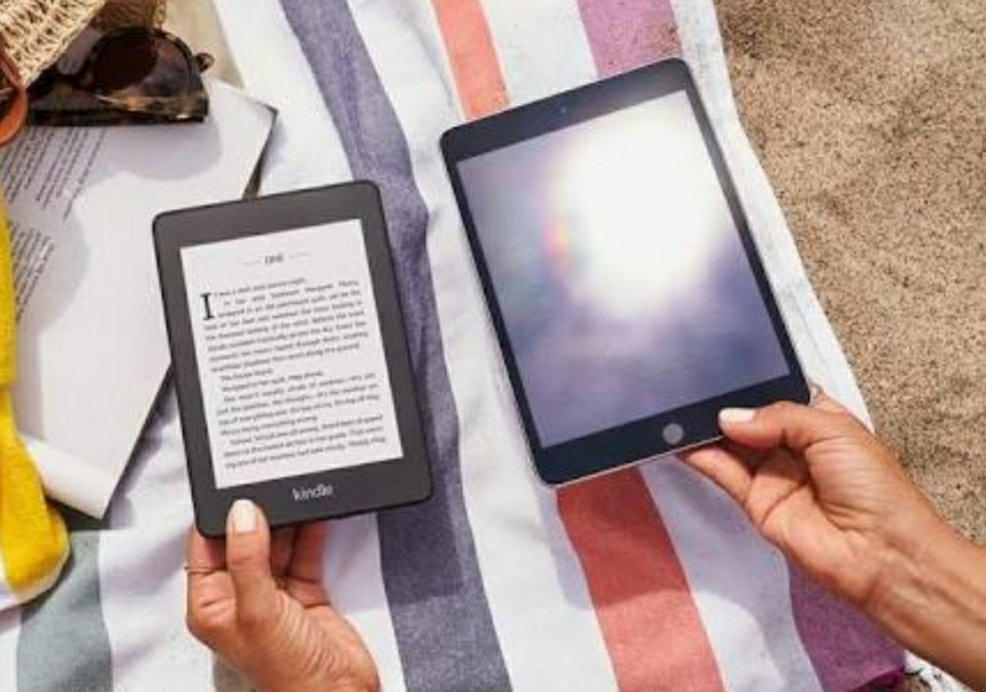
And while it remains to be seen whether Apple’s new iPad will usher in a new era of tablet computing, the device has already had an effect on the e-book market, as seen in last week’s e-book price dispute between Amazon and publisher Macmillan. Allowing publishers freedom to set prices could mean that the iPad (and other e-reading gadgets) won’t hurt the publishing industry the way the iPod damaged the music industry.

While only about 10 percent of people currently use e-readers, the gadgets are “taking off,” L.E.K.’s Schechter said. The tech analyst firm Forrester Research expects 10 million of the devices will be sold by the end of 2010.

“These are still first generation products and you’re already seeing vast increases in reading,” Schechter said. “It’s pretty exciting stuff, and they’re selling like hotcakes.”

Thank you!

Design a site like this with WordPress.com
Get started